
What is the difference between a serviced office and coworking?
A serviced office is a private, lockable room let to you alone, with reception at the door and meeting rooms down the hall from $45 an hour. Coworking is shared open-plan space, usually sold as a desk rather than a room, with the same shared facilities.
The practical difference is privacy and permanence: a serviced office gives you a door that closes and a desk nobody else uses, coworking gives you flexibility and a lower cost.
For most professions that is a preference. For a legal practice it is a compliance question as well.

What do you actually get with each?
Serviced office.
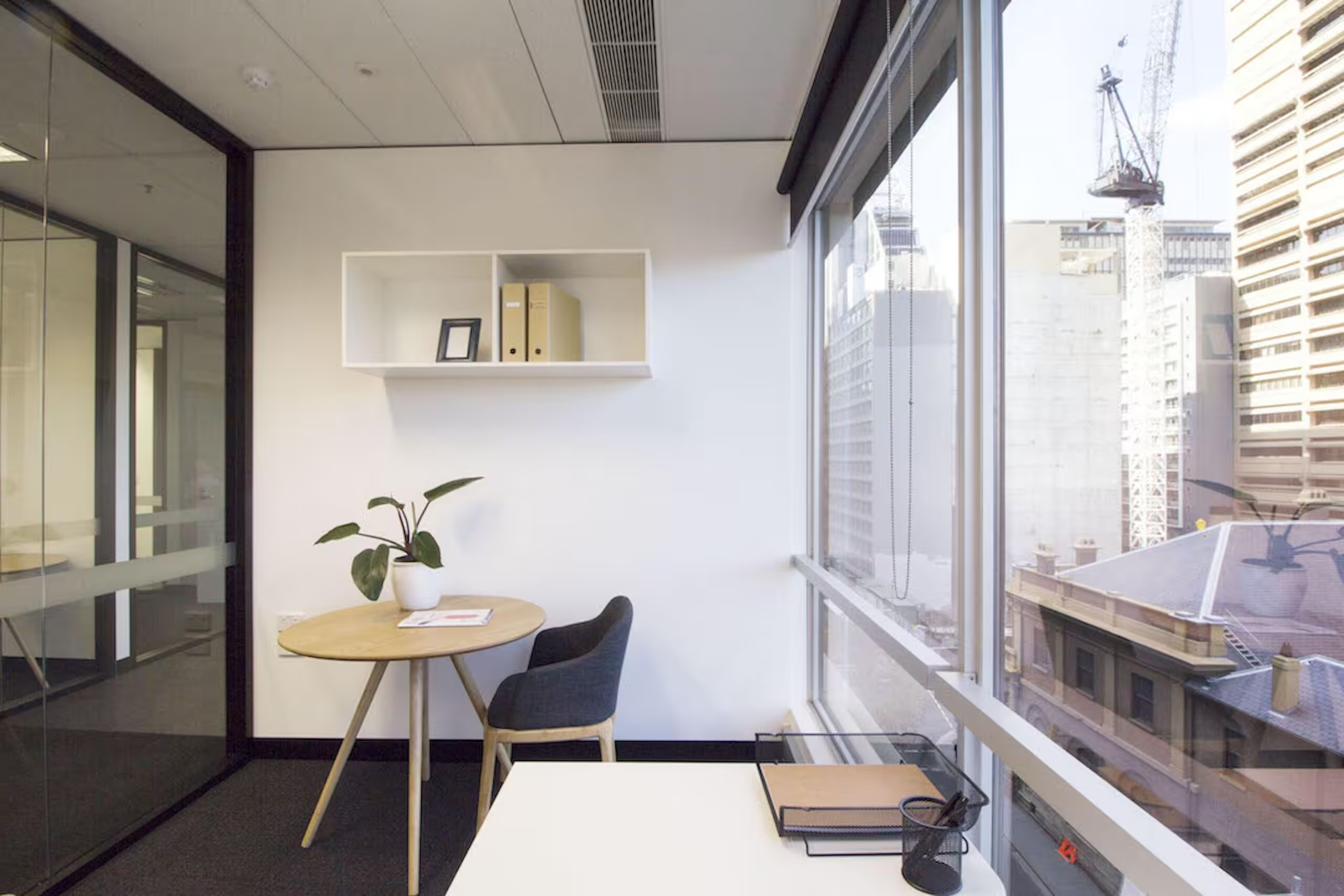
- A private, lockable room, yours alone, furnished and fitted
- A business address you can use on letterhead and court documents
- Staffed reception and mail handling
- Meeting rooms bookable by the hour, from $45
- Internet, cleaning and utilities included, with in-house IT support at member rates
- Typically a licence agreement by the month, not a commercial lease
Coworking.
- A desk in shared open-plan space, either hot desking or a fixed desk
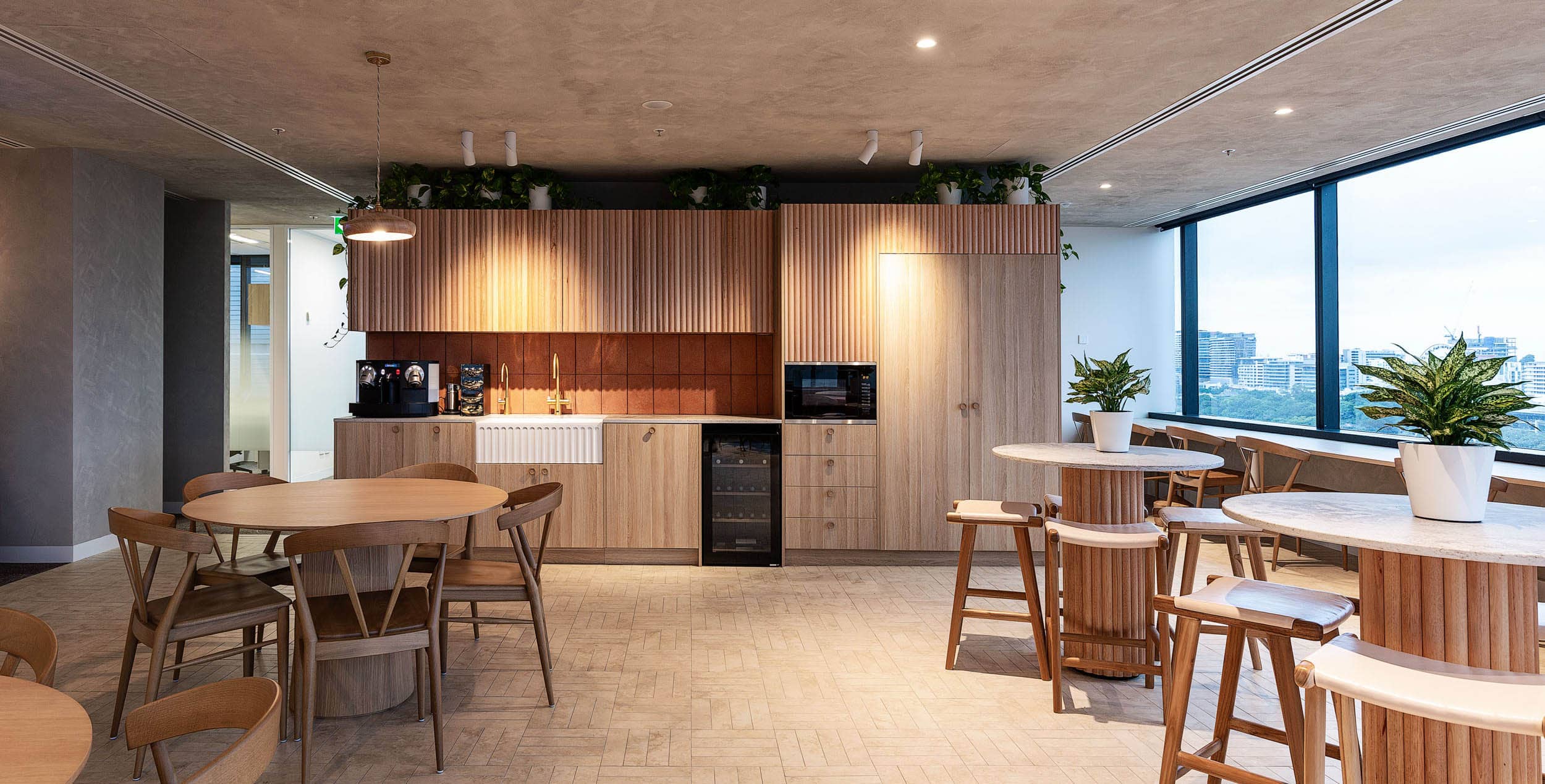
- Shared kitchen, breakout areas and printing
- Meeting rooms, usually by the hour and often charged separately
- Internet and utilities included
- Month to month, sometimes day to day

Which one suits a law practice?
It depends less on the size of your practice than on whether you handle confidential conversations, and almost every practice does.
Three things push legal work towards a serviced office.
Privileged conversations. A call with a client about a matter is not a call you can take in an open-plan room. Booking a room every time you need to speak to someone is workable for a week and unworkable as a practice.
Physical file security. If you hold documents, storage and access controls need to protect confidentiality. A locker or a locked room does not by itself establish compliance.
The impression at the front door. Clients notice. A client arriving at a staffed reception and being shown into a proper meeting room reads differently from a client being met in a shared lounge.
Coworking works well for lawyers in two situations: early on, when the work has not started arriving and the cost matters more than the room, and as a second base in another city where you only need a desk occasionally.
Is a coworking address enough for a law practice?
It can be, but check what you are actually being sold.
The questions worth asking are whether the address can be used on legal correspondence and court documents, whether mail is handled and signed for, whether calls are answered by a person or a voicemail, and whether you can get a private room at short notice when a client needs to see you.
Plenty of operators offer an address without the rest of it. That gets you a line on a letterhead and a problem the first time something needs signing for.
What about a virtual office?
A third option, and the one most lawyers start with.
You get the address, mail handling and phone answering without any dedicated space, and book meeting rooms only when you need them.
For a practice that is genuinely mobile, or one being built alongside another job, this is often the right first step. It gives you the credibility of a CBD address without paying for a room you would use twice a week.
How do these compare on cost?
Coworking is cheapest, a virtual office is usually cheaper still because you are not buying space at all, and a serviced office costs more because you are the only person using the room.
The comparison worth making is against the alternative. A conventional office means a lease, a fit-out, furniture, an internet contract, someone to answer the phone, and IT support. A serviced office is one monthly fee for the room, reception, internet, cleaning and utilities, with no lease, which is why practices that could afford the lease often still do not take one.
Which should a lawyer choose?
Just starting, work not yet arriving.
Virtual office, upgrade when the fees do.
Start your own practiceWorking alone, seeing clients, holding files.
Serviced office.
Private offices for lawyersEstablished practice, one or two staff.
Serviced office, sized to the team.
Need a base in a second city.
Coworking or day access.
Coworking spaces
Clarence has all three across six addresses in Sydney, Melbourne and Brisbane, and members move between them as the practice changes, without a lease at any stage.
“An impressive looking office at a reasonable price and no financial long-term commitment.”
Annelie Hovler, Forseti Law
The space follows the practice.
Shorter terms are available at a higher monthly rate. Prices are monthly, exclude GST, and are current as at August 2026.
Jurisdiction and legal sources
This page provides general information, not legal advice. It does not consider your circumstances. Check the current law and obtain advice from a qualified professional before making decisions about your rights or practice.
A workspace arrangement does not itself establish that a law practice complies with its professional obligations. Practising certificates, insurance, trust money, confidentiality and supervision must be checked separately for your jurisdiction.
NSW and Victoria
Queensland
Sources checked 11 September 2026. Laws, regulator requirements and commercial terms can change. The links above are selected sources for this page, not an exhaustive compliance checklist.