
What does it cost to start a law firm in Australia?
A lean solo practice can get off the ground for roughly $10,000 to $25,000 in first-year set-up and compliance costs, before your own salary. The bigger number to plan for is your buffer: one-off costs plus about six months of running costs, which is what keeps the firm alive while the invoices start flowing.
Here is where the money actually goes.

What are the compliance costs I cannot avoid?
Budget for the principal practising certificate and professional indemnity insurance required for your practice, plus any course or other eligibility requirements that apply to your pathway. Confirm these with your regulator before taking instructions.
- $1,000 to $2,400
Budget roughly this much once fidelity fund contributions and society membership are included. Exact fees vary by state and are published by the Law Society of NSW, the Victorian Legal Services Board and the Queensland Law Society.
- $5,000 to $12,000
What sole practitioners and small firms typically pay through the approved schemes: Lawcover in NSW, LPLC in Victoria, Lexon in Queensland. The good news for a new firm is that premiums are tied to your estimated gross fee income, so a first year with a modest fee estimate can come in well under those figures.
Get a quote early, because this is usually your single biggest compliance cost.
- $1,590 to $2,400
Around this much through providers like the Law Institute of Victoria, Leo Cussen or the College of Law. Required before you can practise as a principal in NSW. In Victoria, an approved course is one pathway; VLSB+C also assesses applications based on skills and experience. Check current requirements with QLS in Queensland.
What does the business set-up cost?
Setting up the entity and your basic kit typically runs $3,000 to $10,000, depending on how much you outsource.
| Item | Typical cost | What that assumes |
|---|---|---|
| Incorporation | $636 | ASIC fees if you set up an incorporated legal practice yourself. More through an accountant or an off-the-shelf provider. Sole practitioners skip this entirely. |
| Branding, website and domain | A few hundred to $5,000 or more | A few hundred dollars doing it yourself, $5,000 or more for professional design. Your website is your digital front door, so this is one of the better places to spend. |
| Practice management software | $2,000 to $6,000 a year | Platforms include LEAP, Smokeball, Actionstep and Clio. If you will handle trust money, check that your chosen setup meets your jurisdiction’s trust record-keeping requirements; a product name alone does not establish compliance. |
| Trust account audit | $2,000 to $5,000 a year | Budget for this as well if you will be holding trust money. |
| Equipment | Often gear you already own | Laptop, phone, second screen. |
What will it cost me to run each month?
Your monthly running costs are rent, insurance, software, marketing and your own salary. The single biggest variable is workspace, and it is the one where the model you choose changes the maths completely.
The traditional path, a leased office with fit-out, reception and IT, front-loads tens of thousands of dollars before you earn a cent. Industry benchmarks put total annual overheads for a sole practitioner at $40,000 to $80,000 in suburban locations and $100,000 to $150,000 with a traditional CBD office.
The serviced and chambers model removes most of that set-up: no fit-out, no separate IT, no reception to staff.
At Clarence, indicative monthly costs are:
- Virtual membership with a CBD address and phone answering: from $195 per month
- Coworking membership: from $299 per month
- Private serviced office: from $935 per month in Brisbane, $1,105 in Melbourne, $850 in Sydney
Cost and overheads were among the biggest worries members named before going out on their own. It is worth saying plainly: the fear is usually calibrated to the traditional leased-office model. Start virtual or serviced and the number that keeps you up at night gets a lot smaller.
Serviced office costs, city by city: Sydney, Melbourne and Brisbane.

How much should I have saved before I start?
One-off costs plus about six months of running costs. That is the buffer that separates firms that survive the slow first invoices from firms that do not.
Two worked examples:
| Scenario | Set-up | Running cost | To open |
|---|---|---|---|
| Lean virtual start | $12,000 | $300 to $500 a month | $35,000 to $55,000 |
| Full office start | $20,000 | $1,000 to $1,900 a month | $50,000 to $80,000 |
The lean start assumes a virtual membership and cloud software; the full office start assumes a private serviced office. Both “to open” figures carry a six-month buffer and modest living costs.
Plenty of Clarence members started with the first model and moved to the second as the practice grew, because there is no long lease locking either choice in.

Can I start a law firm with almost no money?
Yes, if you are deliberate about it.
- A sole practitioner structure
- A low first-year PII fee estimate
- Cloud software that meets your practice’s requirements
- A virtual address instead of an office
- Billing and funds handling checked against trust-money requirements
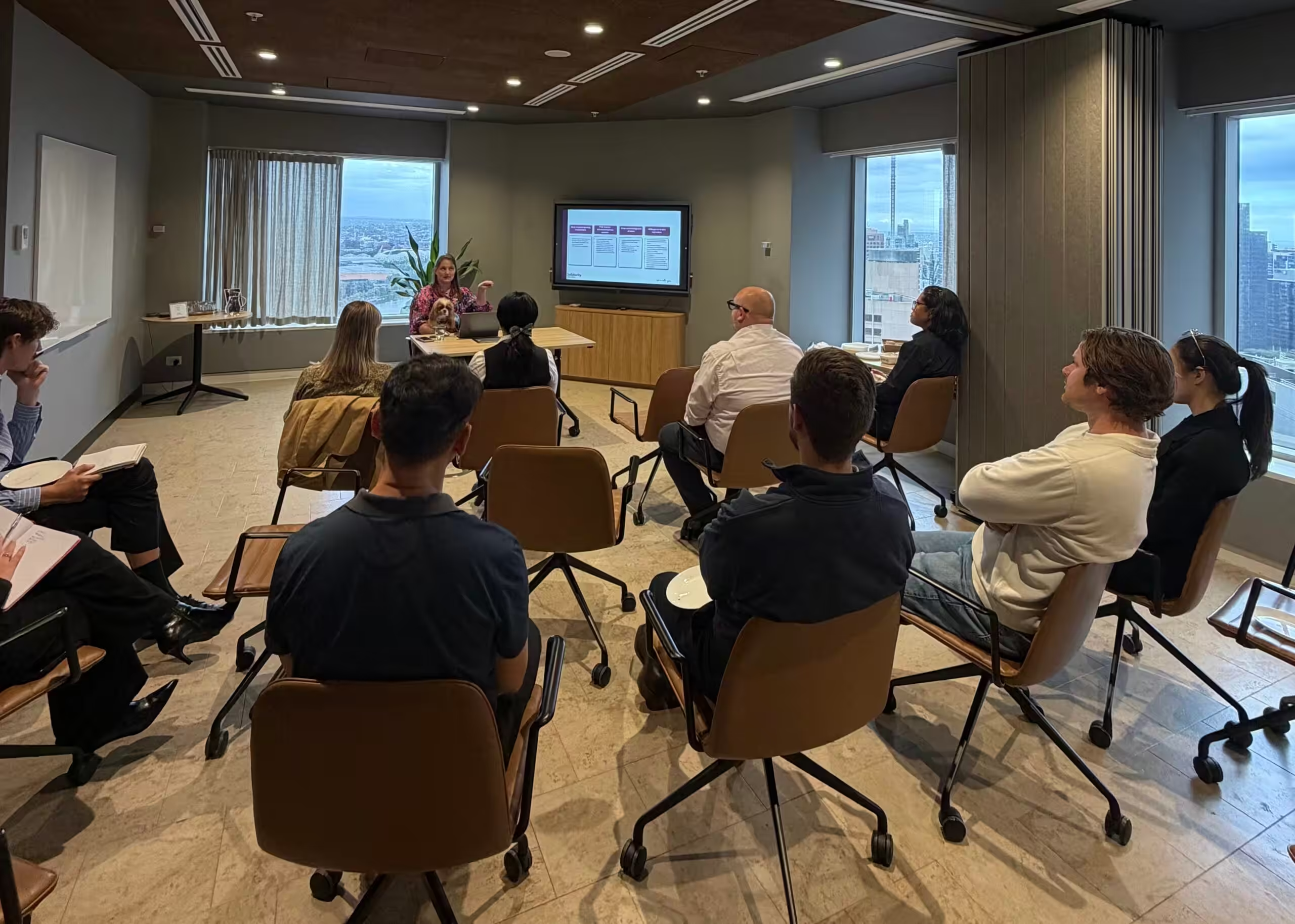
You do not have to guess at the numbers alone
Clarence has watched hundreds of lawyers make this move across Brisbane, Melbourne and Sydney, and the team can walk you through what a realistic first-year budget looks like for your practice area and city.
Where these figures come from
Regulatory fees: Law Society of NSW Scale of Fees 2025-26, Victorian Legal Services Board and Commissioner practising certificate fees, Queensland Law Society fees.
Professional indemnity insurance: Lawcover premium methodology in NSW and LPLC published solicitor premiums 2026-27 in Victoria. Lexon, the Queensland scheme, does not publish rates.
Practice management course: published pricing from the Law Society of NSW, the College of Law and the Queensland Law Society.
Incorporation: ASIC fee schedule 2026-27.
Practice management software: published Australian pricing from Smokeball and Clio.
Clarence membership prices: current Clarence pricing, per office per month on a 12-month term, excluding GST.
Annual overhead ranges for a sole practitioner and trust account examination costs are industry estimates, not published figures.
Figures checked 14 August 2026. Fees and premiums change and vary by state and provider. Confirm current rates with your law society and insurer before you budget.
This guide is general information, not legal, financial or tax advice, and it does not take your circumstances into account. Figures are indicative, change over time and vary by state and provider. Do your own due diligence and seek professional advice before acting on anything in it.
Jurisdiction and legal sources
This page provides general information, not legal advice. It does not consider your circumstances. Check the current law and obtain advice from a qualified professional before making decisions about your rights or practice.
A workspace arrangement does not itself establish that a law practice complies with its professional obligations. Practising certificates, insurance, trust money, confidentiality and supervision must be checked separately for your jurisdiction.
NSW and Victoria
Queensland
Practical regulator guidance
Sources checked 11 September 2026. Laws, regulator requirements and commercial terms can change. The links above are selected sources for this page, not an exhaustive compliance checklist.